A cleft lip and/or cleft palate is the most common craniofacial condition, which refers to abnormalities in the skull and face. It occurs when parts of the baby’s face don’t fully join
together during pregnancy.
- Cleft lip can range from a small notch in the lip to a complete separation that extends into the nose. It can be unilateral (on one side) or bilateral (on both sides).
- Cleft palate is a gap in the roof of the mouth, and it can involve the hard palate (near the teeth) and/or the soft palate (towards the throat).
- In some cases, a cleft palate may also be associated with a small lower jaw, a condition known as Pierre Robin Sequence, which can affect breathing.
Cleft lip, cleft palate, or a combination of both are possible, with each case being unique. 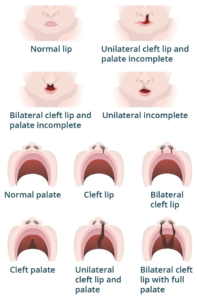
While no one knows exactly what causes a cleft, it is believed to be the result of a combination of genetic and environmental factors.
- Genetics: Some clefts are inherited, while others happen without any family history.
- Environmental factors: These can include things that affect the pregnancy, such as certain medications or other conditions during development in the womb.
In most cases, a cleft is caused by an unpredictable mix of these factors, and it is not something a parent did or didn’t do.
Sometimes, a cleft may occur as part of a syndrome, where a collection of symptoms occurs together.
Around 1 in 700 babies worldwide are born with a cleft. It is a more common condition than many people realize, and it affects children of all backgrounds.
The treatment of a cleft typically involves a team of specialists known as a Cleft Team. This team includes surgeons, speech therapists, orthodontists, and other experts who provide care from infancy through adulthood.
- Surgery is usually performed before the child is one year old to close the gap in the lip or palate.
- Each child’s treatment plan is unique, and may involve additional surgeries to help with speech, tooth growth, or other concerns as they grow.
- Ongoing support like speech therapy, help with hearing, and orthodontics may also be part of the treatment plan. It’s important to remember that every cleft is different, and treatment is personalised to each child’s needs.